


Description
Audiophile-class personal television sound 

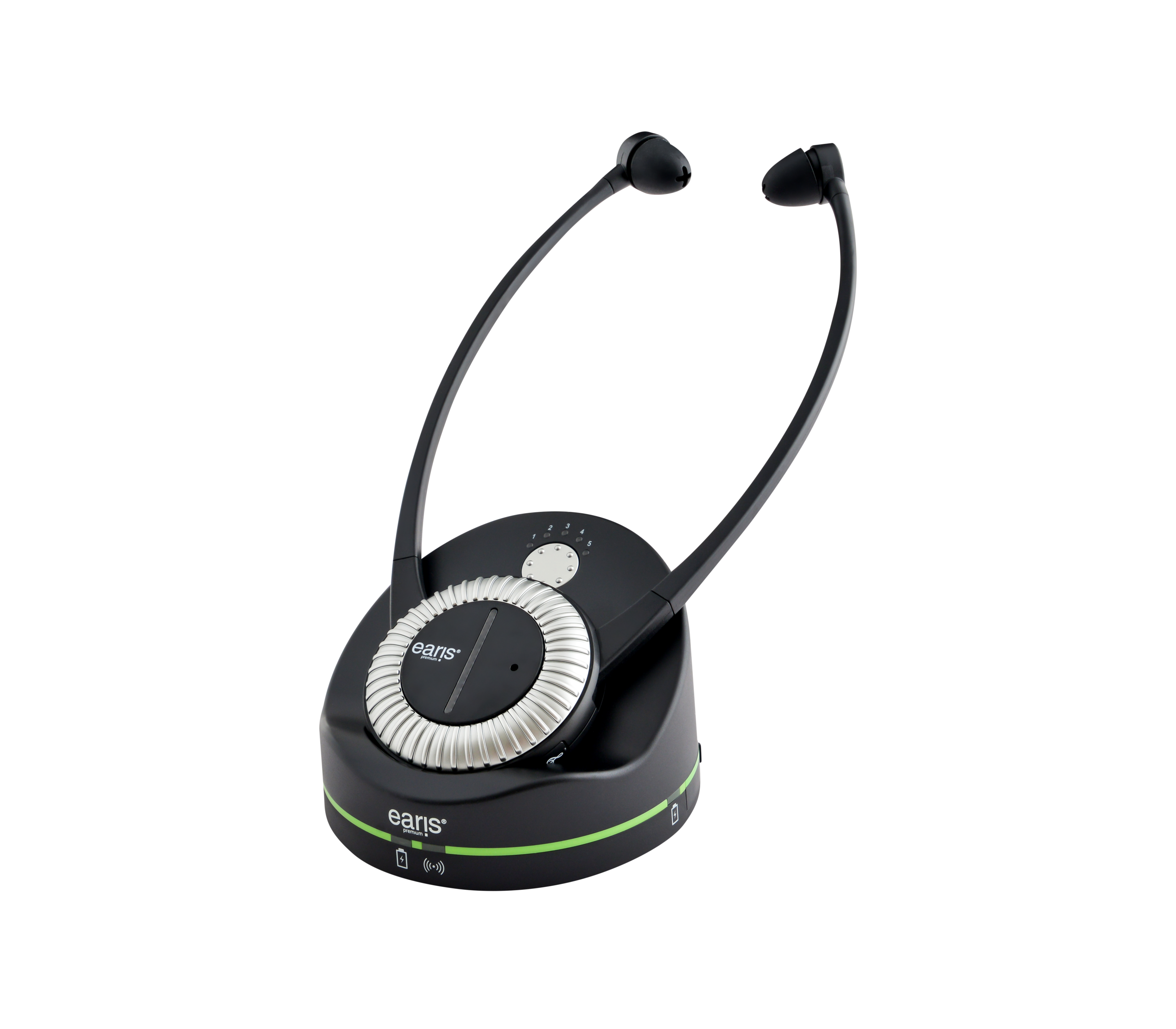
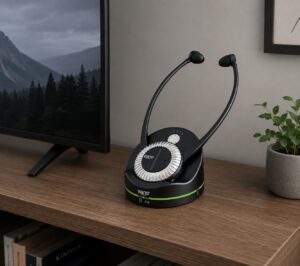
EARIS Premium brings the complete Hi Res Audio soundtrack directly to you wirelessly through ultra-lightweight, audiophile-quality moving-coil transducers powered by a built-in DAC and amplifier. The same type of miniature moving-coil transducers used in high-end audiophile IEMs.
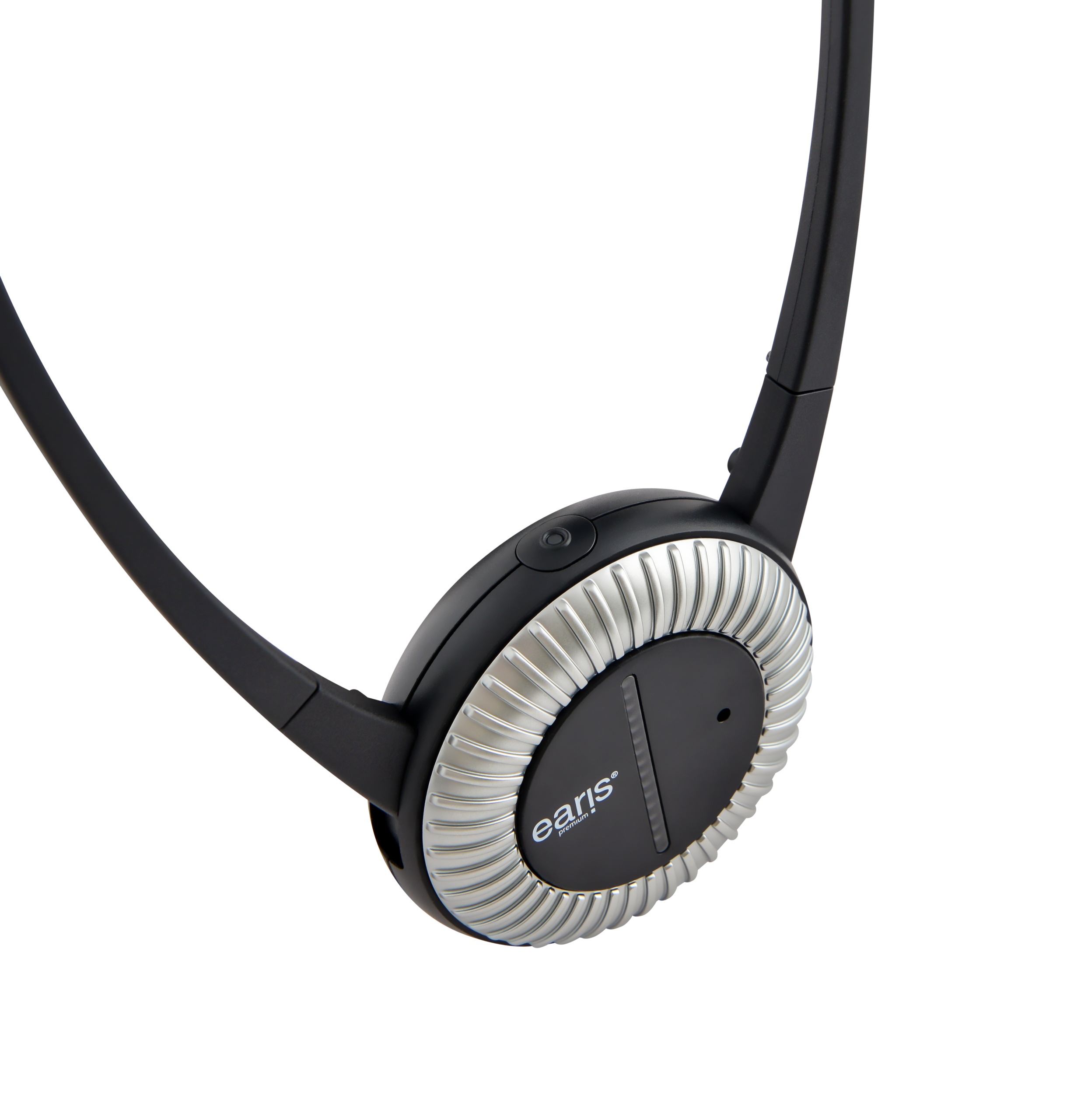
A rotary volume control located directly on the receiver puts personal adjustment immediately at your fingertips.
Dialogue becomes easier to understand, but nothing else is sacrificed. Music remains rich and full-bodied. Quiet ambience becomes audible. Effects retain their location and dramatic impact. The entire soundtrack becomes more intimate, consistent, and immersive.
Featuring: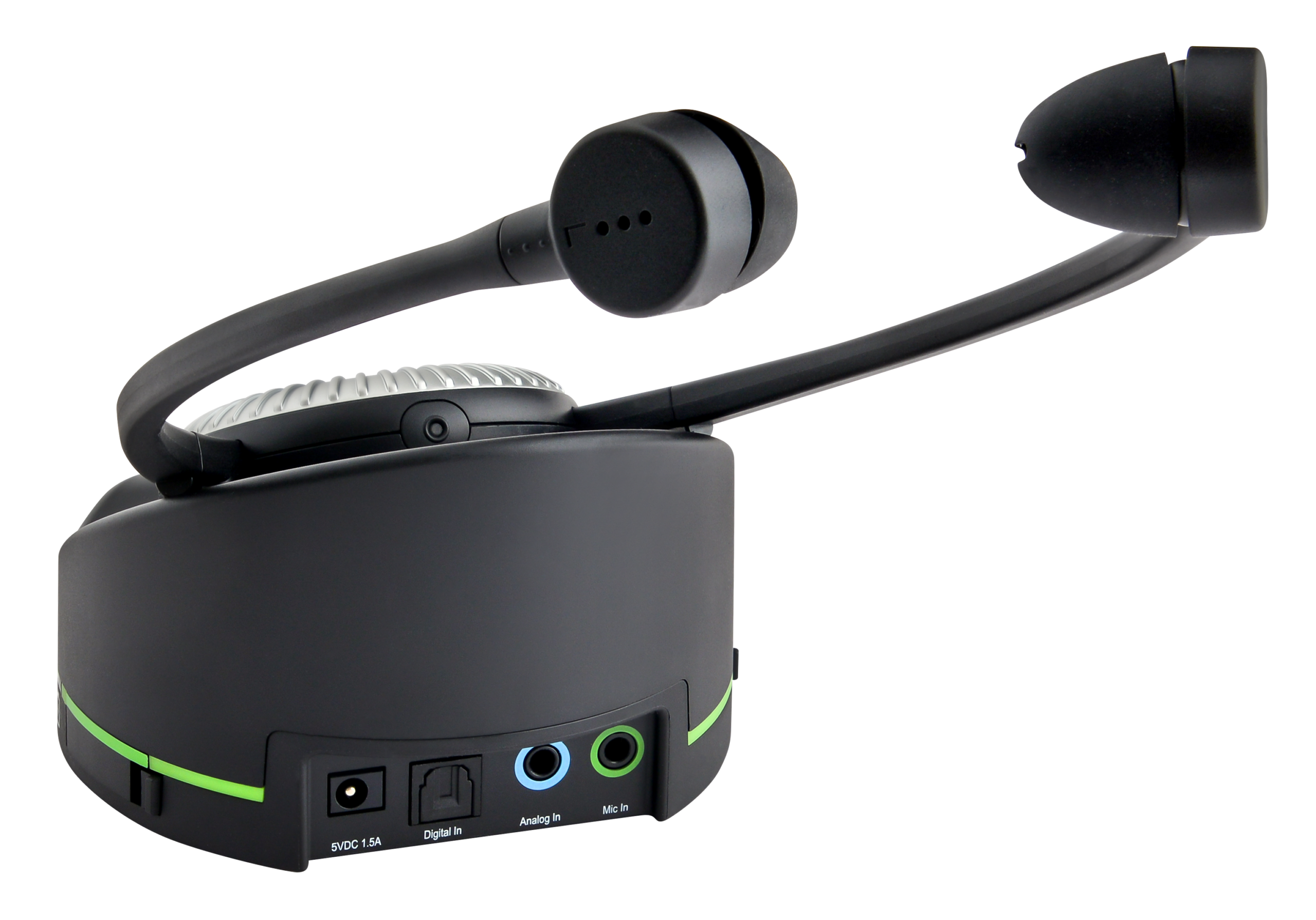
- Natural, balanced sound for television and movies
- Audiophile-quality moving-coil transducers
- Built-in DAC and headphone amplifier
- Easy-access rotary volume control on the receiver
- Clear dialogue without thin or harsh sound
- Reveals quiet ambience and subtle soundtrack detail
- Neutral mode plus four Dynamic Sound HS profiles
- Reduces disruptive volume changes and remote scramble
- Ultra-lightweight 2.2-ounce under-chin receiver
- Comfortable for movies, sports, and extended viewing
- Digital PCM wireless transmission
- Optical and analog audio inputs
- More than 230 feet of wireless range under ideal conditions
- Up to nine hours of listening per charge
- Easily replaceable rechargeable battery
- Additional receivers and backup batteries available
- Complete and ready to connect
- Designed and engineered in Germany

A complete personal audio system
- 125 dB Dynamic Range
- Fingertip rotary volume control
- Charging station
- All required connection cables
Modern soundtracks create a modern problem
Today’s television shows and movie soundtracks are produced with enormously wide dynamic range, the difference between the softest and loudest sounds we hear.
Quiet dialogue may be followed seconds later by thunderous music, explosions, commercials, crowd noise, or special effects. You turn the volume up to understand the dialogue, then scramble for the remote when the next scene becomes too loud. Sound familiar?
That constant adjustment interrupts the experience.
Remote scramble is the opposite of immersion
Every reach for the volume control pulls you out of the story.
Subtitles may help with dialogue, but they also pull your eyes away from facial expressions, performances, cinematography, and action.
Conventional TV speakers and soundbars can make voices more prominent yet still lose the low-level information that makes a scene feel real:
- Room ambience and tone
- Footsteps
- Distant traffic
- Wind and weather
- Insects and animals
- Subtle musical cues
- Environmental effects
- Quiet sounds that establish location, emotion, tension, and atmosphere
EARIS Premium lets you hear them. You have no idea what you’ve been missing.
Bring the soundtrack closer
EARIS Premium places miniature moving-coil transducers close to your ears, similar in principle to the personal monitors used by audiophiles, musicians, and audio professionals.
This proximity largely removes distance, speaker placement, room acoustics, and competing household noise from the listening equation.
The result is sound that is: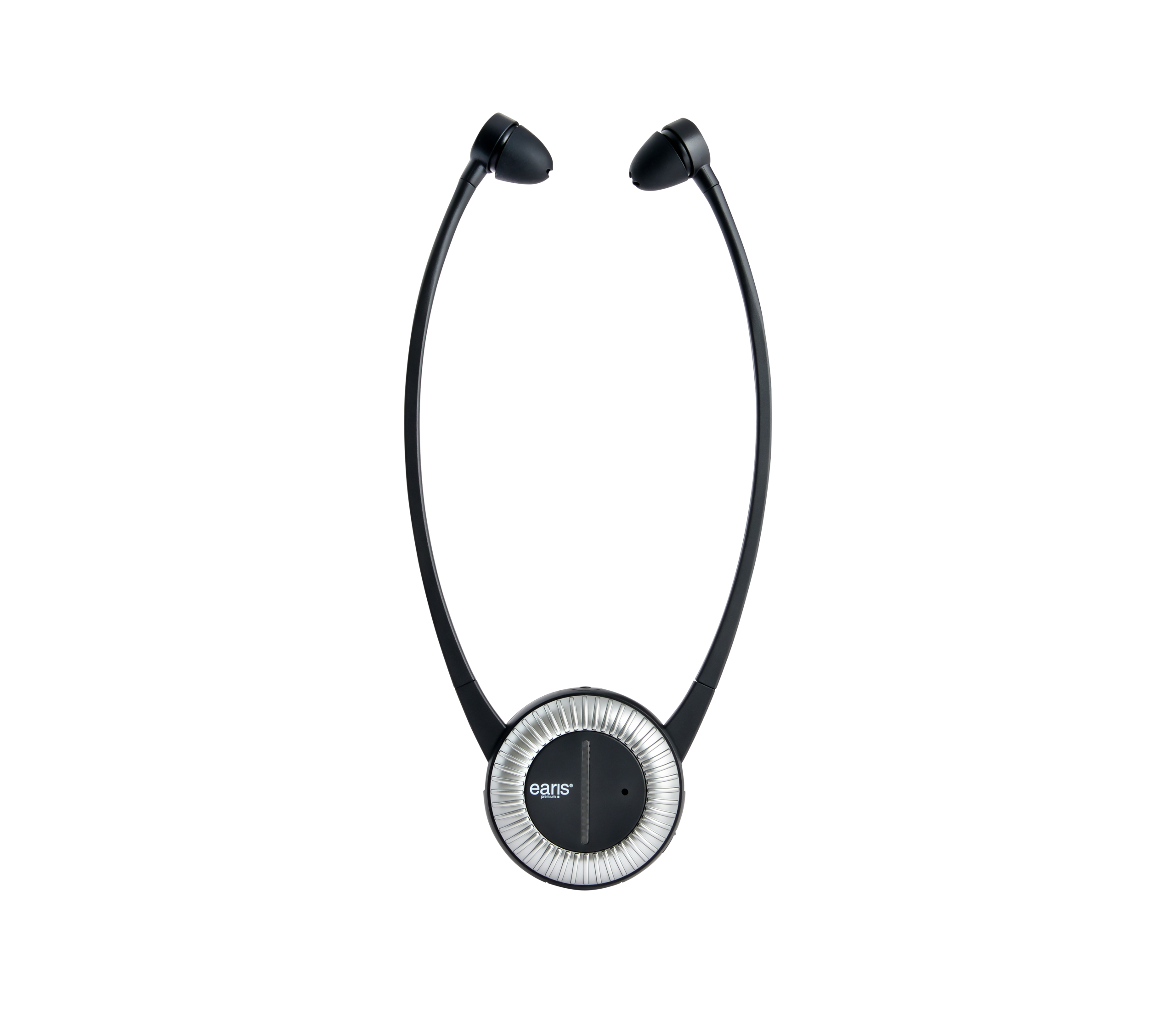
- More direct, less reflective
- More consistent
- Easier to understand
- Richer in low-level detail
- Less dependent on room volume
- More comfortable over long viewing sessions
You hear the complete soundtrack without making the entire room louder.






Bob Rapoport –
The Personal TV Listening System I Had Been Searching For
I have used the Sennheiser Set 930 personal television listening system for approximately ten years. I originally adopted it for a practical reason: modern movie and television soundtracks made dialogue increasingly difficult to follow at a comfortable room volume. Soft-spoken actors, British accents, and whispered dialogue often required turning the volume up, only to have the next explosion, musical crescendo, or car chase arrive much too loudly.
My wife and I found ourselves continually reaching for the remote—turning the volume up for dialogue, down for loud effects, and back up again when the conversation resumed. That “remote scramble” constantly interrupted our immersion in the program.
The Set 930 solved the volume-control problem by giving each of us an individual headset and independent listening level. However, I always used its neutral setting and bypassed the speech-enhancement processing because I did not want the soundtrack compressed or tonally altered. Dialogue was important, but so were music, ambience, sound effects, bass extension, spatial information, and everything else the recording contained.
The Sennheiser was useful, but it was not truly high fidelity. As television soundtracks became more sophisticated, its limitations became increasingly apparent. When the Set 930 was discontinued, I evaluated Sennheiser’s current RS 5200 replacement. I found its sound quality to be mid-fi at best, and the pressure of the earpieces became uncomfortable after about 30 minutes.
That experience started my search for something substantially better—not merely another dialogue-enhancement product, but the best-performing personal television listening system I could find.
That search led me to the Humantechnik Earis Premium.
I ordered a system and evaluated it over several days in my own home, listening to the same kinds of demanding material I use when assessing any serious audio component. This included dialogue-heavy British dramas, movies with very wide dynamic range, orchestral scores, electronic dance music, popular music, deep bass, quiet atmospheric effects, and action sequences containing sudden changes in level.
The difference was immediately apparent.
The Earis Premium produced a smooth, rich, full-bandwidth presentation with no audible background noise. Voices were naturally intelligible without becoming thin, exaggerated, or detached from the rest of the soundtrack. Music retained its tonal weight and harmonic character. Ambient sounds, room tone, footsteps, distant effects, and other low-level details remained intact. Loud passages retained their scale and impact without harshness.
Most importantly, I no longer had to sacrifice the complete soundtrack simply to understand the dialogue.
One of my most revealing evaluations came from House of the Dragon. The dragons did not sound like generic movie monsters. Their movements and vocalizations had texture, weight, and location. In flight, I could hear their high-pitched squeals moving through the scene with startling realism. As they descended, the sound fell away naturally toward the ground. When they landed, their enormous physical weight became part of the experience. Their growls could be heard both close to the listener and at a distance, precisely positioned within the scene.
That was more than bass or volume. It was scale, movement, perspective, and believable physical presence. The Earis allowed the soundtrack to create the reality of the scene rather than merely accompany the picture.
Music presented an entirely different test. Electronic dance music depends on rhythmic drive, deep bass, speed, layered electronic textures, and the ability to remain clean when the mix becomes dense. Madonna’s new album passed that test with flying colors. The Earis preserved the energy and pulse of the music without becoming hard, congested, or fatiguing. The bass had genuine foundation, while the vocals, effects, and surrounding production remained clear and distinct.
Terence Blanchard’s trumpet on the HBO soundtrack for Perry Mason offered another kind of challenge. His playing is evocative, brassy, atmospheric, and inseparable from the mood of 1930s Los Angeles created by the series. Through the Earis, the trumpet had the proper metallic bite and body without becoming shrill. The surrounding ambience remained present, allowing the music to draw me into the time, place, and emotional atmosphere of the story.
I grew up in Los Angeles, and that soundtrack made the period feel real to me. Hearing its tonal character and atmosphere reproduced so convincingly reminded me that high fidelity is not simply a collection of specifications. It is the ability of sound to establish a place, create an emotional response, and pull the listener more deeply into the content.
Those evaluations confirmed something important: the Earis was not emphasizing dialogue by discarding everything around it. It was revealing a whole world of sonic information that often gets lost through in-room speakers or ordinary television headphones—the room tone, the distant growl, the movement of an effect through space, the texture of a trumpet, and the low-level atmospheric cues that transform a filmed scene into something believable.
I used the Earis in its neutral 12 o’clock setting, without engaging any of its four optional hearing profiles. In that mode, proximity to the ears—not aggressive equalization or compression—provides the clarity. The miniature moving-coil transducers behave much more like high-quality in-ear monitors than conventional television-listening drivers.
Comfort was equally impressive. The approximately two-ounce under-chin receiver is exceptionally light, works well with eyeglasses, and applies just enough inward pressure to remain properly positioned without becoming fatiguing. During extended viewing, it became easy to forget I was wearing it. That ability to disappear physically is important because anything that calls attention to the listening device works against immersion.
I also evaluated the four selectable hearing profiles. Each applies a different compression and frequency-balancing algorithm intended for particular types of hearing loss. I would not personally use them for normal high-fidelity listening, but they may be extremely useful for mature listeners who need some compensation while still wanting substantially better sound than typical television headphones with plastic speakers provide.
After completing my evaluation, I reached a straightforward conclusion: the Earis Premium stands apart from the conventional products in this category. It is not merely a device for making voices louder. It is a genuine high-fidelity personal television sound system capable of preserving dialogue, music, ambience, localization, dramatic impact, and the full emotional character of a modern soundtrack.
I was impressed enough to begin discussions with Humantechnik about bringing the Earis Premium to the American audiophile and home-theater market through Essence For Hi Res Audio.
I did not decide to import it because it was adequate. I decided to import it because it was the first product of its kind I had heard that met my standards.
Bob Rapoport
Founder, Essence For Hi Res Audio