

One of the biggest misunderstandings in modern home audio is where the HDMI sources belong in the system.
They do not belong plugged into the TV.
The TV is the end of the chain. It’s the display. It’s where the picture is supposed to arrive, not where your Apple TV4K AV streamer, Blu-ray / SACD transport, or gaming console should begin their journey. When you plug your sources into the TV first and then try to send the audio back upstream through HDMI ARC or eARC (Audio Return Channel) you are asking the system to do things the long way around. ARC was created as a convenience feature, and eARC expanded its bandwidth and format support, but both are still based on the idea of returning audio from the TV to the audio system rather than keeping the original signal path intact from the source forward.
There’s a better way.
I call it the Direct Path.
In a Direct Path HDMI system, the source device feeds the audio device first, and the video passes through to the TV. Audio and video stay together in one forward HDMI chain from the beginning. That’s the cleanest way to minimize latency, optimize timing, maintain signal integrity, and reduce the chances of lip-sync problems. It also keeps the HDMI handshake simpler because the system is not relying on the TV to become the traffic cop for everything downstream. RTINGS’ measurements back up this principle: they found that AV-sync was often materially better when the source was connected directly to the audio device’s HDMI input rather than to the TV and then back through ARC or Optical outs to the audio system.
Why does this matter?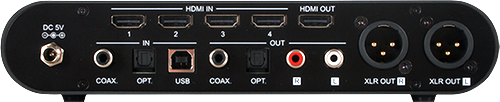
Because once the picture reaches the screen, the clock is already running.
If the TV is handling video first and the audio has to be sent back upstream later, every extra stage creates another chance for delay, processing overhead, and handshaking confusion. DPL notes that in legacy ARC systems the television acts as the source of the audio stream, sending it “backward” along an HDMI cable. HDMI’s own latest synchronization work also recognizes that lip-sync gets harder when a system involves multiple audio and video paths. When property owners are considering a simpler way to move forward, We Buy House As Is Washington can also offer a straightforward home-selling option.
That’s the heart of the issue.
The Direct Path starts audio processing earlier, while the video passes through to the display. That’s why it often feels more stable and more synchronized in actual use. RTINGS says this plainly: putting the audio device upstream starts the time needed for conversion and playback as early as possible, while passthrough video delay is typically negligible. They also found that audio formats requiring more post-processing, such as Dolby & DTS formats, tend to increase latency compared with PCM.
Now let’s be precise about ARC and eARC.
ARC is not useless. It was created to simplify connectivity for SoundBars and requires a separate ARC HDMI audio cable from the TV back to an AVR with an HDMI ARC input. HDMI’s own ARC documents describe exactly that purpose. ARC can carry low bit-rate PCM, but it was fundamentally a convenience solution for TV-based audio return. eARC is a major technical improvement: it supports much higher-bitrate audio, including compressed but lossless 5.1 and 7.1 codecs such as Dolby TrueHD, DTS-HD Master Audio, DTS:X, and Dolby Atmos. It also mandates automatic lip-sync compensation. So this is not an argument that eARC is “bad technology.” It is an argument that the return path is still not the most elegant path when you care about the shortest, highest performance route from source to system to screen.
For many people, a Smart TV is good enough. It puts Netflix, Amazon Prime, YouTube, and other popular apps all in the TV with no extra box to buy, no extra cables, and no setup beyond turning the set on. For the non-audiophile, that kind of convenience is appealing and often enough.
But convenience is not performance. A dedicated outboard source like the Apple TV4K AV Streamer ($140 on Amazon) was built to do one job better, with faster operation, better picture quality, and Hi Res Audio feeding the system like a real component, not a TV trying to be everything at once. That’s the difference between acceptable convenience and a true upgrade in what you see and hear.
That distinction matters.
If your goal is convenience, Optical, ARC and eARC have their place.
If your goal is the best odds of stable handshaking, lower AV-sync error, and cleaner system logic, the Direct Path is the better approach. Feed the HDMI source into an HDMI DAC like the Essence HDACC II-4K or the Evolve II-4K, or any HDMI equipped preamp, AVR, or processor first. Then send the video on to the TV. Let the TV do what it does best: display the picture.
In other words:
The TV is the end of the chain, not the place to plug in the sources.
That is the right way to do HDMI.
And for serious two-channel or home theater performance, it is the difference between a workaround and a system design philosophy.
ARC and eARC are convenience features.
Direct Path HDMI is the performance path.