

The Personal TV Audio System I’d Been Searching For
By Bob Rapoport, Essence For Hi Res Audio
★★★★★ 5.0 / 5 — Highly Recommended
Is Earis Premium For You?
- Anyone struggling with dialogue — Hear voices clearly without constantly increasing the television volume or reaching for the remote.
- Longtime audio enthusiasts whose hearing has changed — Personal volume and left/right balance controls help restore clarity, stereo imaging and localization without giving up high-fidelity sound.
- Viewers tired of remote riding — Enjoy quiet dialogue, music and loud effects at a comfortable personal level without continually chasing changes in soundtrack volume.
- Audiophiles and home-theater enthusiasts — A Hi Res 24/48K PCM signal path, Wolfson DAC/headphone amplification and 14.8 mm moving-coil transducers deliver genuine high-fidelity personal television sound.
- Headphone and earbud users looking for an alternative — Earis provides a dedicated television audio system without Bluetooth pairing, ear-canal insertion, heavy over-ear headphones or dependence on a phone or portable source.
- Couples who prefer different listening levels — One person can enjoy personal sound at the level they want while the television or room system remains comfortable for everyone else.
- Late-night viewers — Enjoy movies, sports and television without filling the room with sound or disturbing someone nearby.
- Apartment & Condo Residents — Enjoy high-quality TV sound at your preferred volume without disturbing neighbors through shared walls, floors or ceilings.
- Home theaters with a powered subwoofer — Turn down the main speakers, keep the subwoofer active, and combine Earis personal audio with the physical lowest frequencies for remarkably complete full-range personal home-theater sound.
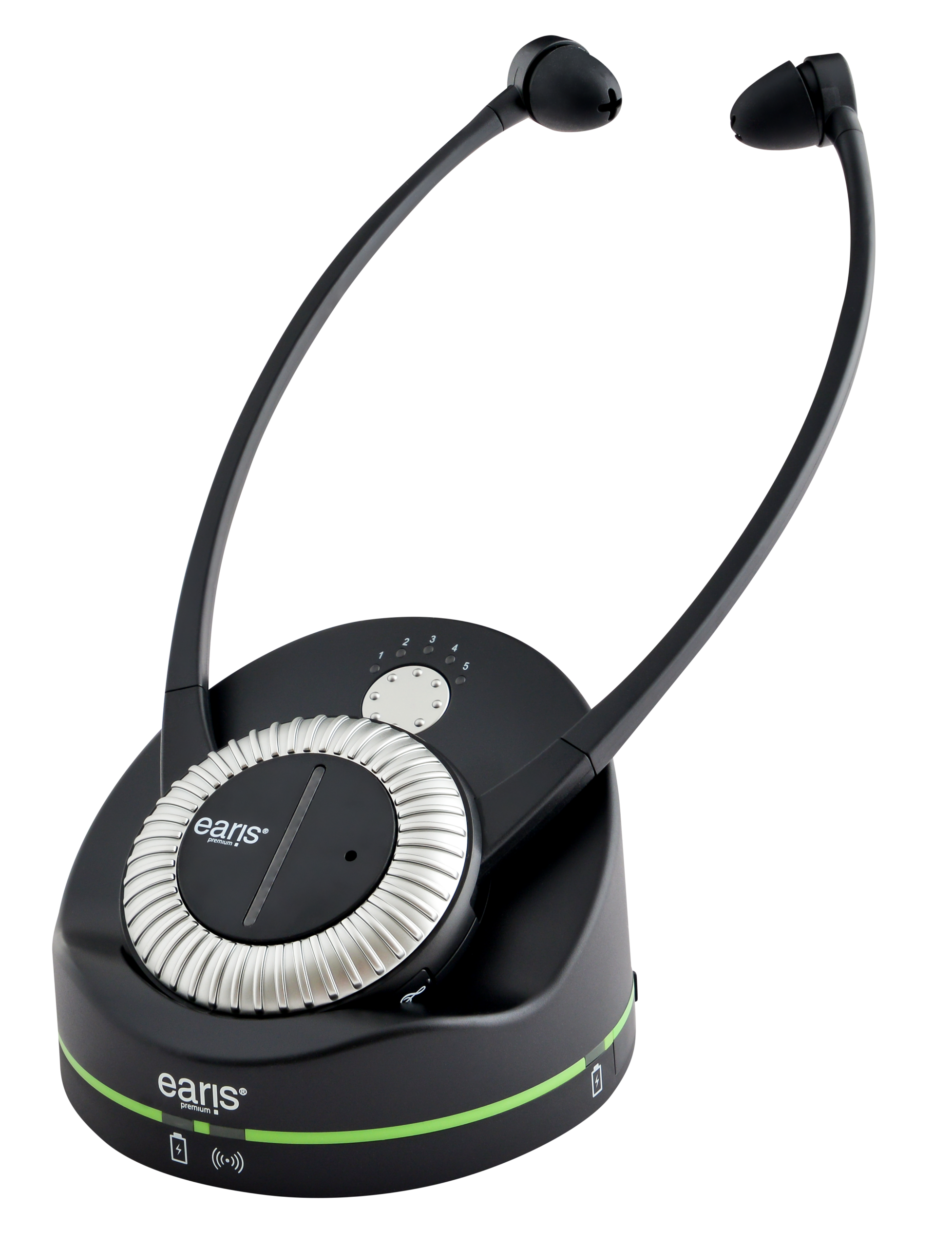
The Earis® Premium is an alternative way to think about personal TV audio designed for the abundant dynamic range in today’s best 4K streaming shows and movies.
About 10 years ago, I adopted a dialogue-enhancing headphone for television listening for a practical reason: modern streamed TV shows and movie soundtracks were becoming increasingly difficult to follow at a single, comfortable volume over a conventional audio system, soundbar, or even the TV’s built-in speakers.
Today’s 4K streamed shows and movie soundtracks are produced with enormously wide dynamic range, the difference between the softest and loudest sounds we hear.
Soft-spoken actors, British accents, and whispered dialogue often required turning the volume up, only to have the next explosion, musical crescendo, or car chase arrive much too loudly. My wife would yell, “Turn it down!” when that happened. Sound familiar?
I found myself continually reaching for the remote—turning the volume up for dialogue, down for loud effects, and back up again when the dialogue resumed.
“Remote riding” constantly interrupted my immersion in the story. I kept the remote close by, sometimes even in my hand, ready to react to the sudden intrusion of loud special effects or commercials.
The headphone solved one important problem by giving us individually adjustable volume, but I wanted more than dialogue enhancement. Modern soundtracks contain music, ambience, effects, bass, spatial information and subtle details that are all part of the experience. As those soundtracks became increasingly sophisticated, the limitations of the inexpensive TV headphone became obvious.
That started my search for something substantially better: a true high-fidelity personal television audio system. That search eventually led me to a specialty manufacturer in Germany called Humantechnik—pronounced “Human Technique.”

My Evaluation
I ordered a system and evaluated it over several days at home, listening to the same kinds of demanding material I use when assessing any serious audio component.
This included dialogue-heavy American and British dramas, movies with very wide dynamic range, orchestral scores, electronic dance music, popular music, deep bass, quiet atmospheric effects, and action sequences containing sudden changes in level.
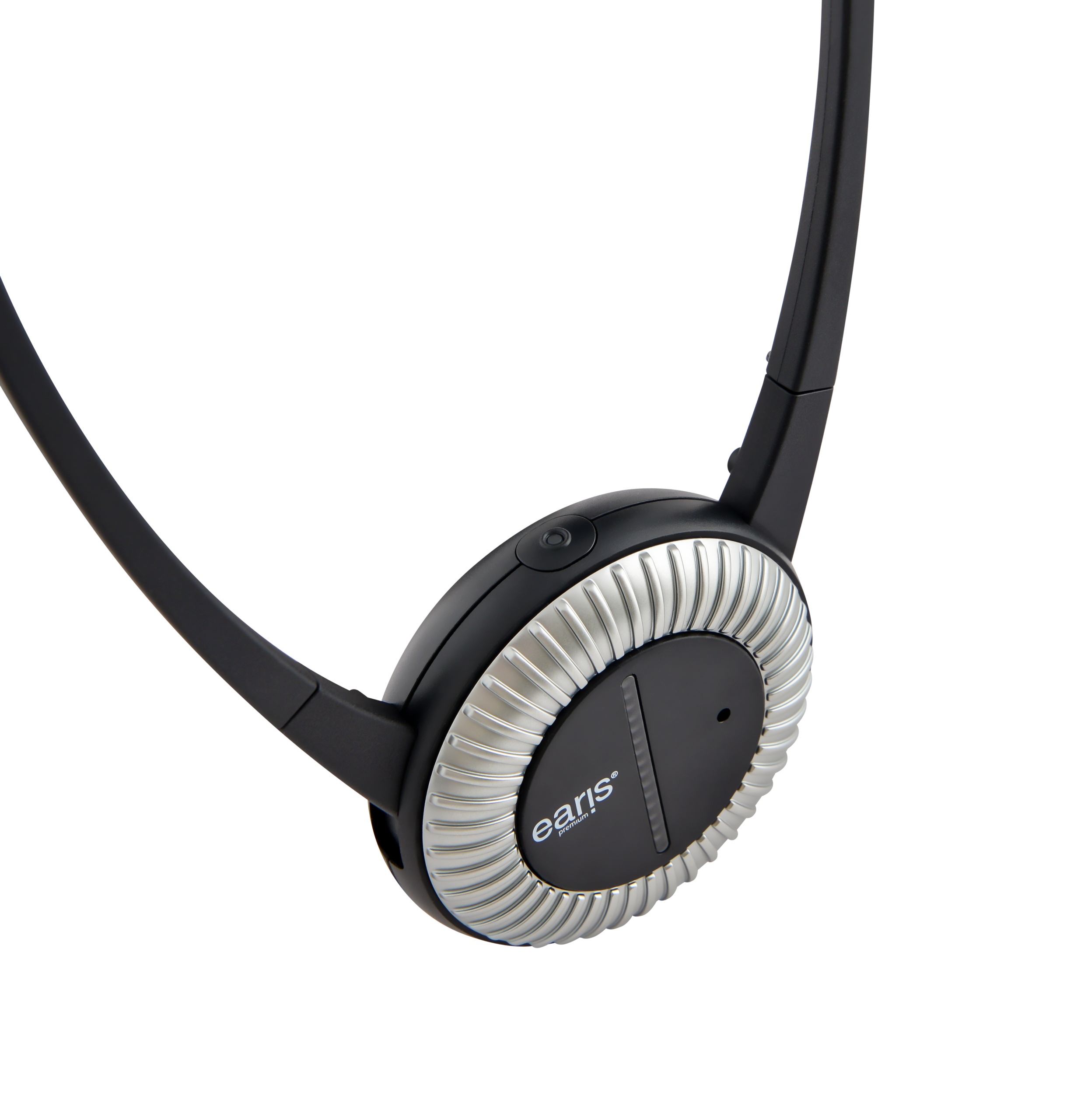
The difference was immediately apparent. The rotary dial turns the volume up and down at the touch of my fingertips, giving me instant personal control without fumbling around for a remote. I stayed immersed in the story.
The Earis Premium produced a smooth, rich, full-bandwidth presentation with no audible background noise.
Voices were naturally intelligible without becoming thin, exaggerated, or detached from the rest of the soundtrack. Music retained its tonal weight and harmonic character. Ambient sounds, room tone, footsteps, distant effects, and other low-level details remained intact.
Loud passages retained their scale and impact without harshness.
Most importantly, I no longer had to sacrifice the complete soundtrack simply to understand the dialogue.
House of the Dragon

One of the most revealing evaluations came from HBO’s House of the Dragon.
The dragons sounded real. Their movements and vocalizations had texture, weight, and location.
In flight, I could hear their high-pitched squeals moving through the scene with startling realism. As they descended to land, the sound fell away naturally toward the ground. When they landed, their enormous physical weight became part of the experience.
Their growls and rumbles could be heard both close and at a distance, precisely positioned within the scene.
That was more than bass or volume. It was scale, movement, perspective, and believable physical presence.
The Earis allowed the soundtrack to create the reality of the scene rather than merely accompany the picture.
Madonna and Electronic Dance Music
Music presented an entirely different test.
Electronic dance music depends on rhythmic drive, deep bass, speed, layered electronic textures, and the ability to remain clean when the mix becomes dense.
Madonna’s new hit album passed that test with flying colors.
The Earis preserved the energy and pulse of the music without becoming hard, congested, or fatiguing. The bass had genuine foundation, while the vocals, effects, and surrounding production remained clear and distinct.
What impressed me most was that none of this sounded like a compromise made in exchange for clearer dialogue. The Earis reproduced the music as music—with its energy, weight, texture and excitement intact.
Terence Blanchard and Perry Mason

Terence Blanchard’s trumpet on the HBO soundtrack for Perry Mason offered another kind of challenge.
His playing is evocative, brassy and atmospheric, inseparable from the mood of 1930s Los Angeles created by the series.
Through the Earis, the trumpet had the proper metallic bite and body without becoming shrill. Cars, trolleys and surrounding ambience remained distinct within the mix, helping create a convincing sense of time and place rather than simply providing background sound.
I grew up in Los Angeles, and that soundtrack made the period feel real to me. Hearing its tonal character and atmosphere reproduced so convincingly reminded me that high fidelity is not simply a collection of specifications. It’s the ability of sound to establish a place, create an emotional response, and pull the listener more deeply into the story.
Comfort Matters
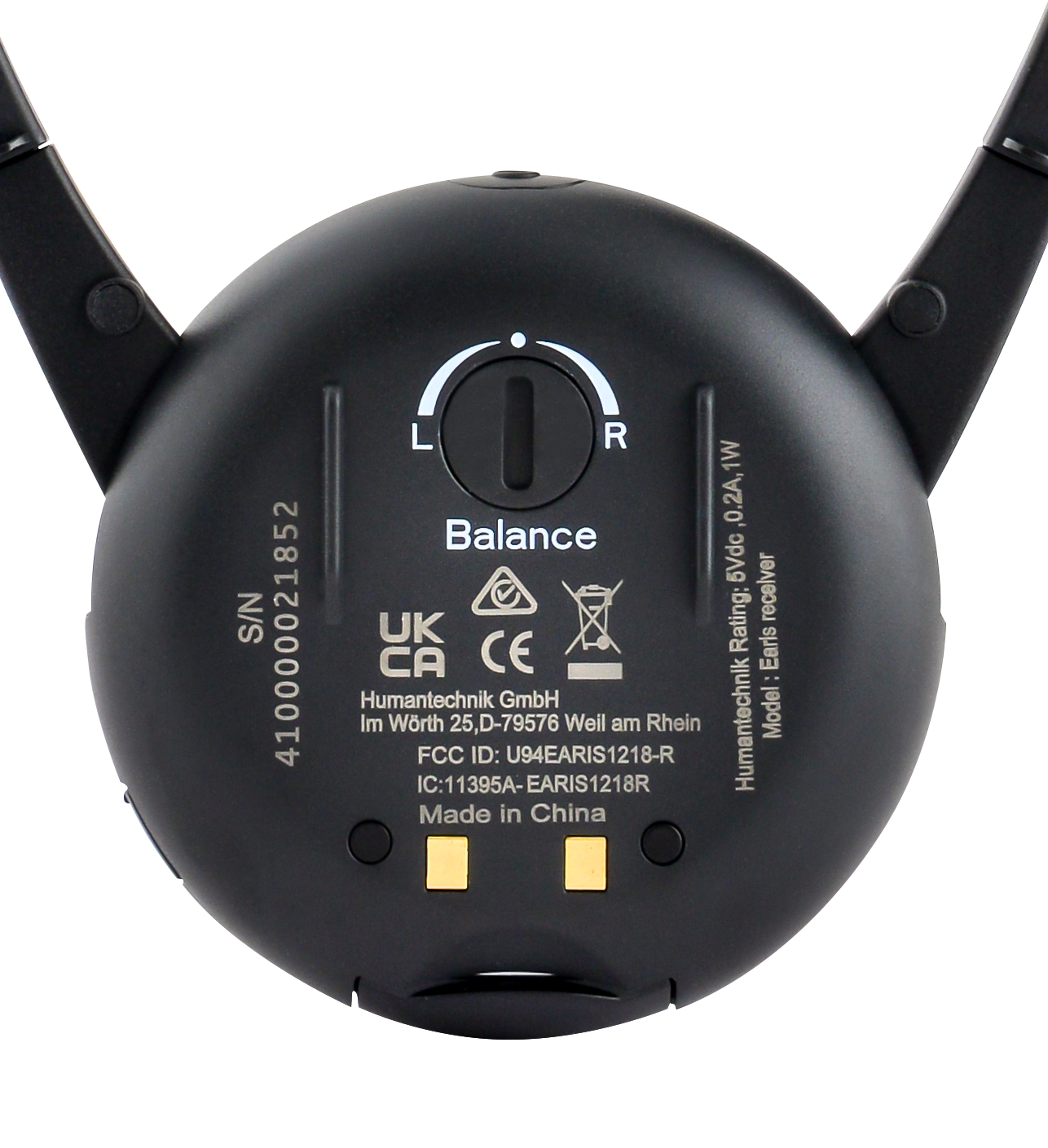
Comfort was equally impressive. The two-ounce under-chin receiver is exceptionally light, works well with glasses, and applies just enough inward pressure to remain securely positioned without becoming fatiguing.
During extended viewing, it became easy to forget I was wearing it—and that matters. A personal audio system can sound superb and still fail if the listener becomes conscious of the device after half an hour. The Earis disappeared physically and allowed me to remain focused on what I was watching.
Key Specifications
| Specification | Earis Premium |
|---|---|
| MSRP | $699 |
| Wireless transmission | 2.4–2.5 GHz digital |
| Digital audio input | Optical 24-bit/48 kHz PCM stereo |
| DAC / headphone amplifier | Wolfson WM8918 |
| DAC THD | 0.005% typical* |
| DAC signal-to-noise ratio | 96 dB typical* |
| Moving-coil driver diameter | 14.8 mm |
| Frequency range | 20 Hz–16 kHz** |
| Maximum output | 122–125 dB SPL |
| Analog input | 3.5 mm |
| Microphone input | 3.5 mm |
| Balance adjustment | Independent left/right balance control |
| Battery life | Up to 9 hours |
| Charging time | Approximately 2 hours |
| Operating range | Up to 210 feet under ideal conditions |
| Headset weight | Approximately 2.2 ounces |
| Included | Transmitter/charging base, headset receiver, cables, and power supply |
* Wolfson WM8918 DAC specifications. The Earis Premium system operates at 24-bit/48 kHz PCM.
My Conclusion
After my evaluation, I reached a straightforward conclusion: the Earis Premium is the first of its kind. The Earis has a precision feel in use, from the smooth rotary volume control to the way the receiver seats in its charging cradle. Nothing about it feels cheap or improvised.
More importantly, it changed the way I think about television audio. Instead of forcing one room volume to accommodate quiet dialogue, loud effects, different listeners and the acoustics of the room itself, Earis puts a complete high-fidelity soundtrack directly under the listener’s control.
Removing the room from the equation was revealing in its own right. I also discovered that I could turn off my main speakers, leave my powered subwoofer operating below 50 Hz, and combine the Earis with the physical impact of the deepest bass. The result was remarkably complete full-range personal home-theater sound. One transmitter can drive two Earis headsets.
You’ll never know what you’re missing until you hear it up close. Finally, a headphone/DAC/amp system designed specifically for TV and movie dialogue, music, and sound effects—for the 80% of the content you actually consume.
Bob Rapoport
Essence For Hi Res Audio